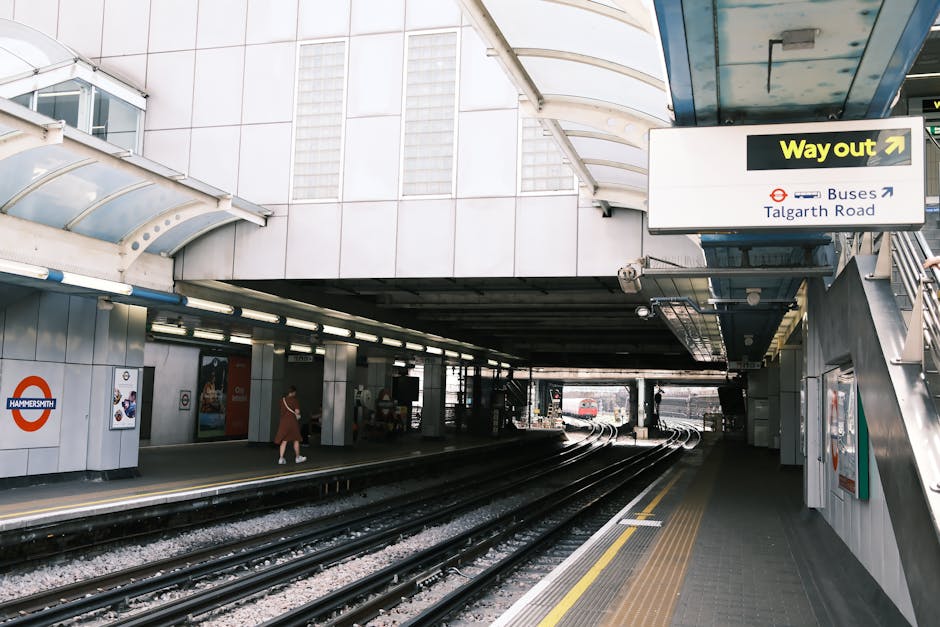
Turnham Green Station access problems for waste removal: what to expect and how to plan properly
If you are trying to organise rubbish collection, furniture pickup, or a bigger clearance near the station, Turnham Green Station access problems for waste removal can make a simple job feel awkward fast. Narrow roads, busy footfall, limited stopping space, awkward loading points, and the usual London time pressure all pile up. The good news? With the right planning, most access issues are manageable. This guide breaks down what the problems usually are, why they matter, and how to handle them without turning the day into a scramble.
Whether you are clearing a flat, disposing of furniture, dealing with builders' waste, or arranging a one-off house clearance, the same principle applies: access determines how smoothly the work goes. Miss that part, and even a small job can become slow, more expensive, or just plain frustrating.
Table of Contents
- Why Turnham Green Station access problems for waste removal Matters
- How Turnham Green Station access problems for waste removal Works
- Key Benefits and Practical Advantages
- Who This Is For and When It Makes Sense
- Step-by-Step Guidance
- Expert Tips for Better Results
- Common Mistakes to Avoid
- Tools, Resources and Recommendations
- Law, Compliance, Standards, or Best Practice
- Options, Methods, or Comparison Table
- Case Study or Real-World Example
- Practical Checklist
- Conclusion
- Frequently Asked Questions
Why Turnham Green Station access problems for waste removal Matters
Access is not just a minor detail. Around a station area, it shapes almost everything about the job: where a vehicle can stop, how far items must be carried, whether the crew can work safely, and how long the clearance takes. That matters if you are paying by labour, if neighbours are watching the clock, or if you need a property cleared before a move, tenancy deadline, or refurbishment starts.
In the Turnham Green area, the practical challenge is often less about the waste itself and more about the environment around it. Think narrow residential streets, parked cars, pedestrian flow, cyclists, and the stop-start rhythm of station traffic. A van may be able to get close enough for a quick lift one day and struggle the next. It sounds simple, but small access changes can create real knock-on effects.
There is also the safety side. Carrying heavy furniture through a tight entrance or along a long footpath increases the risk of damage, strain, and delays. A sofa that takes ten seconds to lift from a driveway can become a five-minute manoeuvre if the only stopping point is awkwardly placed. Not ideal. Not fun either.
For people booking services such as waste removal, furniture disposal, or builders' waste clearance, the access question is often the difference between a clean, efficient visit and a frustrating one. A good provider will ask about it early. If they do not, that is a small warning sign.
Practical takeaway: around station-side locations, access planning is not optional. It is part of the job, not an extra.
How Turnham Green Station access problems for waste removal Works
In real terms, solving access problems means matching the service to the property and the route in and out. The aim is to reduce carrying distance, avoid blocking roads, and keep the collection safe and efficient. That starts before anyone arrives on site.
Usually the process looks like this:
- Initial assessment - You describe the waste, the property type, the floor level, and any access restrictions. This might include stairs, gated entries, shared hallways, or no parking directly outside.
- Vehicle planning - The collection team decides what size vehicle is suitable and where it is likely to stop. Sometimes a smaller van is better than a larger one, even if the load is substantial.
- Time planning - Busy times around the station, school runs, and peak pedestrian periods can affect arrival and loading. Early mornings are not always needed, but they can help.
- On-site routing - The team works out the shortest safe route from the property to the vehicle. Sometimes this means using a rear entrance, side path, or communal access point.
- Removal and sorting - Items are taken out, sorted for reuse, recycling, or disposal, and loaded carefully to minimise mess and disruption.
The better the information shared in advance, the smoother the day usually goes. A quick note about a low archway or a steep driveway can save a lot of back-and-forth later. And yes, that tiny detail can genuinely change the quote or the timeline.
If the job is domestic, a home clearance, house clearance, or flat clearance may need a different access approach than a simple single-item collection. Commercial jobs are different again, especially for office clearance or periodic business waste removal. The access issue remains the same, but the rhythm of the work changes.
Key Benefits and Practical Advantages
Planning access properly sounds mundane. It is. But it also pays off in ways people notice immediately.
- Less wasted time - If the vehicle can get close enough, the job tends to run quicker and cleaner.
- Lower risk of damage - Shorter carrying distances mean fewer bumps, scrapes, and awkward turns through doorways.
- Reduced physical strain - This matters for heavy items, especially wardrobes, appliances, or rubble bags.
- Better price accuracy - Clear access details help the provider price the job more realistically.
- Less disruption for neighbours - A tidy, planned collection is easier on everyone nearby.
- Smarter recycling outcomes - When collections are organised properly, items are easier to sort and divert from landfill where appropriate. See also the site's recycling and sustainability approach.
There is another benefit people sometimes overlook: confidence. If you already know the route, the stopping point, and the approximate timing, you are far less likely to feel tense on the day. Truth be told, that calm matters. Moving waste is rarely glamorous, but it does not have to be chaotic.
Who This Is For and When It Makes Sense
This topic is relevant to anyone trying to organise removal work near Turnham Green Station where access may be limited or unpredictable. That includes homeowners, landlords, tenants, letting agents, local businesses, builders, and people dealing with a messy, inherited, or time-sensitive clearance.
You will probably benefit most if any of the following sound familiar:
- You are in a flat with stairs, narrow hallways, or shared access.
- Your road is busy, and parking outside is not guaranteed.
- You are clearing bulky items such as beds, wardrobes, desks, or broken furniture.
- You have builders' waste, mixed rubbish, or a load that needs sorting.
- You are trying to complete a move-out, renovation, or office reset on a deadline.
- You want a straightforward collection but are unsure whether the van can stop nearby.
It also makes sense if you are simply trying to avoid surprises. Plenty of people only realise access is a problem on the morning of the clearance. By then the van is already parked two streets away and everyone is doing the awkward, half-joking look at the stairs. Better to think it through beforehand.
If you are planning a larger domestic job, a loft clearance, garage clearance, or even a full garage clearance often reveals access issues that are easy to miss at first glance. The same goes for older buildings, which can be charming but not exactly designed around modern skip-style logistics.
Step-by-Step Guidance
Here is the practical way to handle access problems without overcomplicating things.
1. Walk the route before you book
Look from the item location to the nearest likely stopping point. Ask yourself: how far is the carry? Are there tight corners, steps, door thresholds, low branches, or narrow gates? If you can picture the journey while standing in the hallway, you are already ahead.
2. Be specific about what needs removing
Give clear descriptions of the waste type, quantity, and size. A few bags of general waste is very different from dismantled furniture, plasterboard, or mixed builder's debris. Mention anything awkward, heavy, dusty, or fragile.
3. Note the access restrictions honestly
Do not downplay the problem. If the vehicle cannot park close, say so. If there is no lift, say so. If the property is on a busy road with limited loading space, say that too. A realistic picture lets the team bring the right equipment and plan the job properly.
4. Ask how the job will be handled
Good questions include: Will the team carry items from inside? Will they need help from you to open gates or secure access? Will they dismantle furniture on site if needed? These are simple things, but they can save time and uncertainty.
5. Prepare the space in advance
Move smaller loose items together, clear a path to the exit, and keep pets or children out of the working area. If the clearance involves multiple rooms, label piles by room or by priority. It sounds a bit neat-and-tidy, but it really works.
6. Confirm arrival timing and contact details
With station-area access, timing matters. A short delay can mean a very different parking situation. Keep your phone on and make sure the team has the correct entry details. Ten minutes can make the difference between a direct lift and a long carry.
Expert Tips for Better Results
From experience, a few small habits make access problems much easier to manage.
Use photos, not just descriptions. A quick set of pictures of the front of the property, access route, stairwell, and any bulky items can tell the story better than a paragraph of text. It is one of those tiny admin jobs that saves bigger headaches later.
Think in carry distance. A quote or plan often changes less because of the waste volume and more because of the walking distance. If the van can get to the door, great. If not, the labour element rises. That is normal.
Keep flexible on timing. Around transport hubs, a mid-morning slot may be busier than it looks on the calendar. If you can offer a little flexibility, you may get a cleaner route and easier parking. Not always, but often enough to matter.
Break heavy jobs into phases. For larger clearances, it can help to separate recycling, reusable items, and general waste before the crew arrives. This is especially useful for furniture clearance and mixed property clearances, where the load can get messy fast.
Ask about insurance and safety procedures. A professional provider should be able to explain how they manage lifting, access, and damage prevention. You can learn more from the site's insurance and safety and health and safety policy pages.
One more thing: if the job feels too large to do in a single sweep, say so. It is far better to split the removal than to force an overpacked, rushed collection. Nobody wants a van playing Tetris in a narrow street at 4 pm. Nobody.
Common Mistakes to Avoid
Most access problems become expensive only when people make avoidable assumptions. These are the big ones.
- Assuming a large vehicle will fit - It might, or it might not. Verify the stopping point first.
- Forgetting about shared access - Communal hallways, bins areas, gates, and neighbours' cars can all affect the route.
- Ignoring loading restrictions - Some streets are fine for stopping briefly, but not for prolonged loading.
- Underestimating bulky items - One wardrobe can take as much planning as several bin bags.
- Leaving everything until the last minute - Last-minute bookings often leave less room for route planning.
- Not mentioning floor level or stairs - This sounds basic, but it is one of the most common oversights.
- Mixing different waste types without telling the provider - Builders' waste, household rubbish, and reusable furniture may need different handling.
The main theme here is simple: when in doubt, over-communicate. A slightly awkward conversation upfront is much better than a complicated visit later. We all know how that goes, and it is rarely graceful.
Tools, Resources and Recommendations
You do not need special equipment for every job, but a few practical tools make a real difference.
- Phone camera - Take pictures of access points, staircases, and the load.
- Measuring tape - Useful for checking whether a bulky item can turn through a doorway or fit down a corridor.
- Notebook or checklist - Keep a simple list of what is going, what is staying, and what needs dismantling.
- Basic protective gear - Gloves, sturdy shoes, and sensible clothing help if you need to move smaller items first.
- Labels or sticky notes - Handy for separating items by room or priority.
For service planning, the most useful resources on the site are the service pages themselves, especially pricing and quotes, waste removal, and the more specific pages for flats, homes, offices, and furniture. Those pages help you match the job type to the right service instead of guessing.
If you are not sure what type of clearance you need, start with the general service overview, then work outward from there. That is usually easier than trying to force your job into a category that does not quite fit.
Law, Compliance, Standards, or Best Practice
Waste removal in the UK sits within a framework of legal and practical responsibility. You do not need to become a compliance expert to book a clearance, but you should expect the provider to work safely, dispose of waste responsibly, and explain how they handle different materials.
For customers, the key best-practice points are straightforward:
- Be honest about the waste type - Especially if there may be hazardous, sharp, dusty, or heavy materials.
- Do not block emergency access - A careful collection plan should never compromise safety or access for others.
- Check for insurance and safety procedures - This matters in tight access jobs more than people sometimes realise.
- Ask how items are sorted - Reuse, recycling, and disposal should be handled sensibly and transparently.
- Read terms before booking - A clear understanding of scope, timing, and payment avoids awkward surprises later. The site's terms and conditions and payment and security pages are a sensible place to start.
Where access is limited, good operators also tend to think harder about manual handling and crew coordination. That is not just about efficiency. It is a safety issue. Heavy lifting, awkward angles, and long carries all raise the stakes. A provider that takes that seriously is usually worth listening to.
Options, Methods, or Comparison Table
Different access situations call for different approaches. The best method depends on distance, load type, and how busy the surroundings are.
| Method | Best for | Pros | Trade-offs |
|---|---|---|---|
| Direct van-to-door loading | Properties with nearby stopping space | Fast, efficient, usually simplest | Depends on parking and road access |
| Short carry from a side road or nearby bay | Areas with limited but workable access | Still practical, often flexible | Takes more labour and time |
| Phased clearance | Large or mixed-load jobs | Reduces pressure and keeps things orderly | May need more than one visit |
| Item-by-item dismantling before removal | Bulky furniture or tight doorways | Easier passage through narrow spaces | Extra prep time required |
| Smaller vehicle approach | Very tight streets or low-clearance routes | Better manoeuvrability | May require multiple trips for larger jobs |
For many local jobs, the right answer is not the biggest vehicle or the fastest route. It is the one that fits the real access conditions. Simple, really. But people miss it all the time.
Case Study or Real-World Example
Imagine a two-bedroom flat not far from the station, with bulky furniture, a boxed loft load, and a narrow street where parking is never guaranteed for long. The resident wants the place cleared before a tenancy handover on Friday afternoon. On paper, it looks like a standard collection. In reality, the access is doing a lot of work.
The sensible approach would be to:
- Confirm whether the van can stop close enough for safe loading.
- Photograph the stairwell and front entrance.
- Identify the heaviest items first, especially wardrobes or large shelving.
- Separate reusable items from general rubbish.
- Schedule the job at a time that avoids the busiest local traffic pattern.
In a case like this, the successful outcome depends less on brute force and more on small decisions. Maybe the wardrobe is dismantled before collection. Maybe the team uses a shorter carry route through a side access point. Maybe the load is split into furniture and general waste so the vehicle can be packed more safely. None of that is flashy. It just works.
That is usually what a good access plan looks like: calm, a little unglamorous, and effective.
Practical Checklist
Use this before you book.
- Have I described the waste clearly?
- Have I said whether it is household, office, furniture, garden, or builders' waste?
- Have I checked the route from the property to the nearest stopping point?
- Have I mentioned stairs, lifts, gates, or narrow hallways?
- Do I know whether bulky items need dismantling?
- Have I taken photos of the access points?
- Have I asked about timing and parking limitations?
- Have I kept pets, children, and walkways clear for the day?
- Do I understand the booking terms and payment details?
- Have I considered whether the job needs recycling or sorting first?
If you can tick most of those off, you are in good shape. If not, no drama - just fill the gaps before the clearance date.
Conclusion
Turnham Green Station access problems for waste removal are rarely about one dramatic obstacle. More often, they are a chain of small things: parking, carrying distance, timing, building layout, and the sheer reality of busy London streets. The trick is not to hope the access issue disappears. The trick is to plan around it properly.
When you describe the job clearly, think about the route, and choose the right service for the load, most of the stress falls away. That is especially true for flats, offices, bulky furniture, and mixed-property clearances where access can change the whole shape of the work. A little preparation now usually saves a lot of hassle later. And frankly, that is a relief.
Get a free quote today and see how much you can save.
If you are still weighing up the best approach, start with the service information that matches your job and then reach out when you are ready. A well-planned clearance is one less thing to worry about, and some days that is worth a great deal.
Frequently Asked Questions
What are the main Turnham Green Station access problems for waste removal?
The most common problems are limited parking, busy roads, pedestrian traffic, narrow access routes, stair-only buildings, and carrying waste a longer distance than expected. None of these are unusual on their own, but together they can slow a job down.
Does access difficulty usually affect the price?
It can, because longer carrying distances and more complex loading usually take more time and labour. The exact effect depends on the size of the job and the route involved, so it is best to describe the access clearly when asking for a quote.
Can waste be removed if the van cannot park right outside?
Yes, often it can. The crew may park nearby and carry the items from the property to the vehicle. The key question is how far the carry is and whether the route is safe and workable.
What should I tell the provider before booking?
Tell them the type of waste, approximate volume, floor level, access route, parking situation, and whether anything is especially bulky or heavy. Photos help a lot. Really, a lot.
Is this relevant for furniture and sofa disposal?
Yes. Furniture jobs are often where access problems show up first, especially with large wardrobes, sofas, mattresses, or desks. If you are arranging furniture clearance, access details matter as much as the items themselves.
What if my property is a flat with stairs and no lift?
That is common, and it is usually manageable. Just be upfront about the stairs, turnings, and any shared hallway issues so the team can plan the lifting route and bring the right support.
Do I need to separate recycling before collection?
You do not always need to sort everything yourself, but separating obvious reuse, recycling, and general waste can make the job smoother. It can also help with responsible handling and disposal.
How far in advance should I arrange a clearance near the station?
As early as you can if the job is time-sensitive. If you have a move-out, renovation deadline, or office changeover, give yourself a little breathing room in case access turns out to be trickier than expected.
What kind of jobs are most affected by access problems?
Flats, loft clearances, office clearances, builder waste jobs, and large furniture removals are the most likely to be affected. These jobs tend to involve heavier items, more trips, or more complicated routes.
Can access issues cause delays on the day?
Yes, especially if the team arrives and has to find alternative parking or a different carry route. A short delay is often enough to change the flow of the whole collection, which is why clear communication matters.
Are there any safety concerns with difficult access?
There can be. Tight stairs, long carries, uneven surfaces, and awkward lifting points all increase the risk of strain or accidental damage. That is why a professional approach, proper planning, and sensible manual handling are so important.
Where can I learn more about the company's approach to pricing, safety, and sustainability?
Useful starting points include pricing and quotes, health and safety policy, insurance and safety, and recycling and sustainability. Those pages help set expectations before you book.